It isn’t the guns; it’s the culture

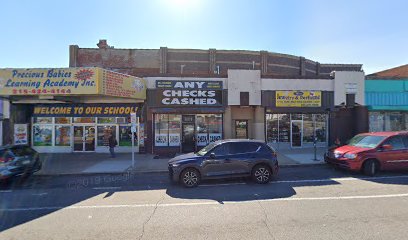
5439 Race Street, Philadelphia

Race Street in foul, fetid, fuming, foggy, filthy Philadelphia is not the worst neighborhood in the City of Brotherly Love, but it isn’t Society Hill, either. The photo is not specified as the crime scene, but is designed to show readers what the neighborhood looks like.

In doing my almost daily research on crime in the city, I happened upon a six-day-old story by Philadelphia Inquirer nighttime breaking news reporter Robert Moran. It says little, because his information was (probably) a sparse report from the Philadelphia Police, but it actually says a whole lot:

3 wounded in West Philly shooting

More than 50 shots were fired shortly before 10 p.m.

by Robert Moran | July 7, 2021

Also from the Inquirer: DA Larry Krasner aims to keep teen offenders out of criminal justice system with new restorative program. What a great idea to leave wannabe thugs on the street!

Two men and a woman were wounded in a shooting Wednesday in West Philadelphia, police said.

Shortly before 10 p.m., a barrage of shots were fired from 60 feet away at a group of people standing on the porch of a residence on the 5400 block of Race Street across from the Nichols Park playground, said Chief Inspector Scott Small.

A 22-year-old man was struck several times throughout his body. A 20-year-old man was shot in the leg and a 29-year-old woman was hit in the shoulder. All three were transported by police to Penn Presbyterian Medical Center, where they were reported in stable condition, Small said.

Someone on the porch returned fire at the one or more shooters, Small said.

Mr Moran’s report simply says that the crime scene was in the 5400 block of Race Street, across from the playground. The photo to the left, which may be enlarged by clicking on it, is more of a panorama of Race Street across from that park.

The police reported that they found “more than 50” shell casings at the crime scene, and that there were 10 to 15 people on the porch or inside the home.

The “one or more” shooters were aiming at a specific person, with whom he, or they, had a specific reason to kill. Someone on the porch was armed and returned fire. “More than 50” expended shell casings, and only three people were hit?

I can do something really radical here and tell the truth. The victims almost certainly knew who the shooters were, and that’s the case in the vast majority of Philadelphia shootings and killings, that’s the case in almost every such incident in big cities all over the country. Yet these crimes are being solved at a decreasing rate, because the residents won’t talk to the police. They’re too afraid of the gangs, they don’t like the police in the first place, and, let’s be honest again, they depend more on street justice than anything from law enforcement.

Why won’t The Philadelphia Inquirer report on neighborhood conditions?

I am shocked, shocked! I tell you, that The Philadelphia Inquirer covered the shootings in the City of Brotherly Love over the weekend.

First, the numbers. The Philadelphia Police Department reported that there have been 294 homicides as of 11:59 PM EDT on Sunday, July 11th. Over 192 days in the year, that works out to 1.53125 per day, on pace for 559 murders for the entire year. That’s a 34.25% increase over the same day last year.

On the same day last year, the numbers worked out to a projected 415 killings, and we know that the city actually finished with 499. The record of 500 was set in 1990, during the height of the crack cocaine wars.

If the city continues on the same pace as established yesterday, it will tie the record of 500 on the 327th day of the year. That would be Tuesday, November 23rd, two days before Thanksgiving, with 5½ weeks left in the year.

15 people shot — one 14 times, another 11 — in a weekend of gun violence in Philly

Last week, the city’s total of those killed or wounded in shootings since 2015 surpassed a staggering 10,000 people, The Inquirer reported.

By Diane Mastrull | July 11, 2021

A sextuple shooting in North Philadelphia, during which one man was shot 14 times, was just one of eight episodes of gun violence from late Saturday night into early Sunday morning involving 15 victims, two of whom died, police said.

Killed were a man of unknown identity and age who was shot multiple times inside a business on the 1600 block of West Cumberland Street in North Philadelphia at 10 p.m. Saturday and a 23-year-old man shot 11 times in the back, chest, leg, arm and neck on the 100 block of Leverington Avenue in Manayunk at 12:54 a.m., according to police reports.

All shootings took place between 10 p.m. and 4 a.m. Two were doubles, as Philadelphia continued on a trend seen in cities across the country. Last week, Philadelphia’s total of those killed or wounded in shootings since 2015 surpassed a staggering 10,000 people, The Inquirer reported. July was off to a violent start with 77 people struck by gunfire in the first eight days of the month, according to the report.

The one involving six victims was reported around 11:30 p.m. at West Butler and North Ninth Streets, in the city’s Hunting Park section. The victims were all males, ages 22, 23, 28, 31, 34 and 41. Four were in stable condition and two in critical condition Sunday at Temple University Hospital, police said. The 23-year-old was shot 14 times, they said.

According to police, a surveillance video shows two males walk up to a group gathered on the 900 block of West Butler Street and begin firing before fleeing in an unknown direction. A search for them continued Sunday evening.

901 West Butler Street. Screen capture from Google Maps. Click to enlarge.

Well, at least the Inquirer didn’t tell us that two inanimate guns levitated and shot these people themselves. A photo in the Inquirer shows the scene, with two police evidence people working the scene, amidst dozens of evidence markers, and what appears to be three neighborhood loiterers. The photo to the left shows the address, a bodega at 901 West Butler Street, and it isn’t exactly a middle-class area.

This was a targeted hit: shooting one guy 14 times isn’t some sort of accident, and two “males” — note, not “white males” or “black males” or “Hispanic males”, describing either the shooters or their victims[1]Note that in one of the internally referenced stories in the Inquirer, it states, “Nearly 94% of the 10,000 people shot since 2015 were Black or brown, according to the city’s data. … Continue reading — walking up and opening fire isn’t just “gun violence,” but clearly attempted murder. The shooters knew who their targets were, and had a pretty good idea where to find them.

If the survivors decide to tell the police who shot them, and odds are very great that they know their assailants, we’ll eventually find out that the shooters have long rap sheets, and District Attorney Larry Krasner treated them leniently.

909 West Butler. Click to enlarge.

A photo just a couple of buildings away shows that this is an unsafe neighborhood, as the residents at 909 West Butler Street spent good money to completely bar in their front porch. 909 looks like someone has been trying to take care of his row house, but there are a lot of buildings in view with peeling paint and other signs of not being well maintained.

721 West Butler Street. Click to enlarge.

A couple blocks down the street, at 721 or 723 West Butler, the owners have completely barred in their property. Why, it’s almost as though they don’t feel safe in the neighborhood, as though they don’t trust the people there.

This is the part that the Inquirer doesn’t report. People are virtually locking themselves in jail to protect their families and themselves.

Use Google Maps for 3810 North Franklin Street, near 721 West Butler, and toggle up the street. The photos show a racially integrated neighborhood, but one in which several row homes, including three in a row, at 3846, 3848, and 3850 North Franklin, have barred in their front porches. Why doesn’t the Inquirer ever report on that? The paper loves to blame ‘systemic racism,’ but the photos from Google Maps show white people as well as black, show an integrated area.

These neighborhoods are overwhelmed not by inanimate guns, but by bad people living in a bad culture. They are relatively poor, but are trying to protect what little they have, not just from guns, but from theft, from assault, and from rape . . . but all that the “anti-racist news organization” reports on is “gun violence,” because the #woke staff are just deathly afraid of blaming bad people.

References

References
1 Note that in one of the internally referenced stories in the Inquirer, it states, “Nearly 94% of the 10,000 people shot since 2015 were Black or brown, according to the city’s data. Three-quarters of the victims were Black males,” but the Inquirer story won’t tell you that about the victims in the reported shootings. I wonder why that is. There’s something wryly amusing that the Inquirer follows the Associated Press stylebook change, in which the AP noted that they would capitalize “black” in reference to race, but not “white,” and in this case, the writers capitalized “black” but not “brown”. As per our stylebook, we do not capitalize ‘colors’ when referring to race.

The Washington Post will never get the right answers because they refuse to look at uncomfortable data

It’s always good when a credentialed media source catches up with The First Street Journal, but one thing is certain: it only happens reluctantly.

    If progressives don’t start taking rising crime seriously, they risk getting mugged by reality

    Opinion by Helaine Olen Roshkow | Washington Post Columnist | July 10, 2021 | 8:00 AM EDT

    Democrats, Republicans and independents all say there is a “major crisis” in violent crime, according to a poll released this week. This a serious matter. Crime is up throughout the United States. The murder rate surged nearly 20 percent in 2020, compared with 2019. Road-rage shootings have doubled nationally, claiming victims such as 6-year-old Aiden Leos in California in May.

    But many among the progressive community don’t want to admit this. They seem to believe that acknowledging a covid-era crime wave will jeopardize hard-won gains fighting for bail and sentencing reform, attempts to reform the nation’s police forces, and the fight to address racial injustice. MSNBC host Joy Reid, for example, recently accused the media of riling people up over the issue, tweeting: “I’ve seen more TV stories about crime than the actual anecdotes from friends in [New York City] or other big cities bear out.” Others point out the levels are rising from numbers significantly lower than during the height of the crack epidemic in the 1980s, so why worry?

It was 1999, and I was on the ‘management team’ with the company for which I then worked. A friend of mine named Ken, also on the management team, was responsible for our safety numbers, among other things. We were all under instructions from the corporate Vice President to have numerical goals for different things, and Ken was supposed to have a numerical goal for lost time accidents. He quipped, “So, if we’re below our target, does that mean we have to go out and deliberately hurt someone?”

Obviously, the goal for lost time accidents should be zero, but if it’s always zero, you’ll always fail. Mrs Roshkow at least seems to recognize this: going higher on a negative is always a failure, and no one is going to be satisfied with an “it’s not as bad as the 90s” answer.

Trouble is, she doesn’t recognize what happened in the 1990s, when Mayor Rudy Giuliani cleaned up the horror story that was then New York City by being a Republican who was tough on crime.

    The denial needs to stop. The failure to engage and take on the issue of growing violence and lawbreaking now — no matter how unpleasant, distasteful or uncomfortable — will only harm the progressive agenda and potentially cause swing voters to pull the lever for Republican candidates.

You mean Republicans who will actually get things done in reducing crime?

    Traditionally, voters view Democrats and progressives as softer on crime than “law and order” Republicans. That’s why even right-leaning Democrats are sometimes vulnerable to getting pinned as supporters of the far-left slogan “defund the police.” Rising crime rates provide an opening to grandstanding Republicans, who claim it is the result of Democrats not adequately supporting cops. As House Minority Leader Kevin McCarthy (R-Calif.) said this week: “Crime is soaring in cities managed by Democrats.”

    Ridiculous. But the politics of backlash is a real thing. As we’ve seen in both the distant and near past, fear can lead otherwise left-leaning people to vote in a more right-wing direction. The violent crime wave of the 1990s ultimately gave us the now-reviled federal anti-crime bill in 1994 and California’s “three strikes” law, which sent shoplifters to prison for decades. More recently, the “defund the police” slogan is widely suspected of costing Democrats votes in tight 2020 congressional elections while in June’s Democratic mayoral primary in New York City, Eric Adams, running on a “law and order” platform, decisively defeated more progressive challengers, such as Maya Wiley.

Mrs Roshkow said that Mr McCarthy’s claim was “Ridiculous,” but it’s the stone-cold truth. I’ve harped on foul, fetid, fuming, foggy, filthy Philadelphia on this site, but the numbers don’t lie: the Philadelphia Police Department’s Current Crime Statistics page showed that, as of 11:59 PM EDT on Thursday, 291 people had spilled their life’s blood out on the city’s mean streets. 291 ÷ 189 days so far in the year, = 1.5397 homicides per day, for a projected 562 for the year. Philly’s record is an even 500, set in the crack cocaine wars of 1990, while 2020 came in second with 499. If the rate continues as is, the City of Brotherly Love will not just break the unfortunate record, but leave it far behind in the rear view mirror. The current pace is so bad that, if maintained, the city will tie the 1990 record on the Sunday before Thanksgiving, with six weeks left in the year.

Naturally, instead of supporting the get tough on criminals policies which worked in the 1990s, she blames not actual criminals, but those inanimate guns that seem to levitate and shoot people all by themselves!

    Progressives, instead of denying rising crime, should stick the blame right where it belongs — on Republicans. Gun sales increased significantly last year. The one thing that links almost all gun violence? Easy access to firearms. But Republicans refuse to back even minor restrictions on guns ownership. Another thing that stops crime? Summer jobs programs for teens living in poverty. Fund more of them — and remind people which party often opposes doing that.

Thing is, it might not be those evil reich-wing Republicans buying all of those guns. Also from The Washington Post, on the same day:

    ‘Fear on top of fear’: Why anti-gun Americans joined the wave of new gun owners

    Pandemic, police violence, calls to ‘defund the police’ fuel surge of first-time buyers

    By Marc Fisher, Miranda Green, Kelly Glass and Andrea Eger | July 10, 2021

    All his life, Jabril Battle was anti-gun. Then came the pandemic, the lockdown, the shortages and a feeling that at any moment, things could blow. Battle bought a Beretta.

    Drawn to last summer’s protests against police violence, Savannah Grace found herself face-to-face with a camo-clad officer’s long gun. She’d always hated guns, but went out and got a Glock 45.

    In blue cities and red suburbs alike, firearms purchases soared last year — to the highest level in half a century, based on federal background checks. A striking portion of those sales went to first-time gun buyers — 40 percent, according to the firearms industry’s trade association. Other studies show first-timers accounting for more like a fifth of sales in 2020, but that’s still unusually high, retailers said.

    Overall gun ownership nationwide jumped from 32 percent of Americans to 39 percent last year, according to University of Chicago survey data — well under the 50 percent level of half a century ago, but the biggest jump in recent decades.

    From the downtown streets left empty by the pandemic’s shutdowns to the sharp spike in homicides and the nationwide conflict over the role and behavior of police officers, a disorienting and often frightening year drove many decisions to buy guns, according to dealers and buyers alike.

That doesn’t sound like the bad guys buying guns — not that most of them buy them legally anyway — but by ordinary people afraid of the bad guys, and of policies by the left that would reduce police protection.

    Sales to women and people of color rose in 2020. Firearms industry data shows sales jumping 50 percent among Black customers, 47 percent among Hispanics and 43 percent among Asian Americans, though gun ownership remains proportionately lower among those groups compared with Whites.

Actually, the linked data show that “The highest overall firearm sales increase comes from Black men and women who show a 58.2 percent increase in purchases during the first six months of 2020 versus the same period last year.” Maybe this from The Philadelphia Inquirer is why:

    Nearly 94% of the 10,000 people shot (in Philadelphia) since 2015 were Black or brown, according to the city’s data. Three-quarters of the victims were Black males.

There’s something wryly amusing that the Inquirer follows the Associated Press stylebook change, in which the AP noted that they would capitalize “black” in reference to race, but not “white,” and in this case, the writers capitalized “black” but not “brown”. As per our stylebook, we do not capitalize ‘colors’ when referring to race.

This is the real reason “anti-gun Americans joined the wave of new gun owners”: because the incredible surge in homicides has occurred in their neighborhoods! The very people they politically support are the ones among whom the surge in violence has occurred.

A lot of the city statistics released do not include the race of victims and known killers, but St Louis, our highest homicide rate city, does. According to the report dated July 11th, out of 99 homicide victims thus far, 92 (74 males and 18 females) were black. In a city that is not quite half black, 46.41% black to be more precise, 92.9% of the homicide victims are black. More, of the 42 identified suspects of those 92 murders, 41 are black, and the other is listed as ‘unknown.’

So, how dangerous is it to live in St Louis? Using the figures from the St Louis Police Department, I created the chart above. Taking the population of St Louis, 294,890, adjusting it for race and sex by percentages of the population, dividing the number of homicides by 191, for the number of days so far in the year (up to July 10th), then multiplying that number by 365, I arrived at projected homicides for 2021. Taking those numbers, dividing by population, and then by 100,000, I got the anticipated homicide rate per 100,000 population, the way figures are normally reported. If you are a white male, you are facing a homicide rate of 8.26 per 100,000 population; white women are looking at a homicide rate of 5.73.

But if you are black? Black women are facing a homicide rate of 46.62 per 100,000, while black males have the number 204.25 per 100,000 population staring them dead in the eye!

If the problem were just that there are too many guns, why is there such a discrepancy between the murder rates between whites and blacks, in the same city? That’s the question which nobody will ask, because nobody is willing to look at the answer.

Yes, I know: some people say that math is racist, but math just is. And if you are unwilling to look at the facts, without excluding things because you don’t look at where certain evidence might lead, you will never get the right answers.

The answer is simple: there is something in the urban black culture which teaches too many of its children that it’s perfectly acceptable to go out and shoot other people. Maybe why that is ought to be the question people should ask.

Another mugshot missed We publish what the Lexington Herald-Leader will not

Christopher Roberts. Photo by Three Forks Regional Jail, Lee County, via WKYT-TV

WKYT-TV, Channel 27, the CBS affiliate in Lexington, is the news partner with the Lexington Herald-Leader. So, when the Herald-Leader reports a story after WKYT, and WKYT has the mugshot available, we know the Herald-Leader did as well.

    Estill County man charged in connection with woman found dead on rural road

    By Beth Musgrave | July 10, 2021 | 12:24 PM | Updated: 12:42 PM EDT

    A 43-year-old Estill County man was arrested Saturday in connection with the death of a 50-year-old woman who was found on a rural Estill County Road on Wednesday.

    Kentucky State Police have charged Christopher Roberts of Irvine with murder and tampering with physical evidence. Roberts is being held at the Three Forks Regional Detention Center in Lee County.

    Police were called at 10 a.m. on Wednesday to Marbleyard Road after a woman was found lying in the road. She was pronounced dead at the scene.

    The woman was later identified as Cindy Donnela Stevens-Roberts, 50, of Irvine.

The story concluded by saying that there was no other information available, but, of course there was; there was the suspect’s mugshot, which WKYT-TV published at 9:58 AM, 2½ hours before the Herald-Leader story was written. But we all know that publishing the suspect’s mugshot would violate McClatchy Mugshot Policy.

Suspected murderer nabbed

Danzell Cruze, from the Kentucky Offender Online Lookup.

We noted, two weeks ago, that the Lexington Herald-Leader declined to publish the mugshots of two murder suspects on the lam. Naturally, The First Street Journal found the mugshots, and yes, we published them!

Well, we are happy to report that Danzell Cruse, the death of 38-year-old Jocko Green, has been apprehended:

    Man apprehended in Central Kentucky, charged with a Lexington murder, police say

    By Jeremy Chisenhall | July 9, 2021 | 1:43 PM | Updated: 4:14 PM EDT

    A Lexington murder suspect has been apprehended and charged with the shooting death of a 38-year-old man, Lexington police said Friday.

    Danzell Cruse, 26, was located and arrested Thursday in Frankfort, police said. He’s accused of shooting and killing 38-year-old Jocko Green. Green was found in a parking lot outside an apartment complex in the 600 block of Winnie Street on June 17, police said.

    Green was taken to University of Kentucky Chandler Hospital after he was shot, police said. He died about three hours later, according to the Fayette County coroner’s office.

There’s more at the original. Mr Cruse was apprehended due to work by the United States Marshalls and the Frankfort Police Department.

The Herald-Leader did not publish Mr Cruse’s mugshot with the current story, but, since he’s now off the streets, I suppose he no longer falls under the McClatchy Mugshot Policy guidelines for an exception to the no mugshot publication rules.

Killadelphia The killers are playing catch up; The Philadelphia Inquirer is not

It was just yesterday that we noted that The Philadelphia Inquirer doesn’t seem to pay much notice to the murders of young black males in the City of Brotherly Love. I pointed out, in the footnote, that with 287 homicides in 188 days (as of 11:59 PM on July 7th) equaled 1.5266 homicides per day, projecting a total of 557 for the year.

Well, it looks like the city’s thugs realized that they weren’t quite meeting their quota, because after two straight days of the Philadelphia Police Department reporting only one homicide, the gang bangers caught up: the Current Crime Statistics page shows 291 killings as of 11:59 PM on July 8th. 291 ÷ 189 days in the year, = 1.5397 homicides per day, for a projected 562 for the year.

The Inquirer? Digging into several pages of their website at 8:30 AM — now at 4:42 PM, current update — this morning, I couldn’t find a single story, not so much as what Inquirer columnist Helen Ubiñas called a “handful of lines in a media alert,” although it’s possible I just didn’t dig into the right place.

Nevertheless, the editors and journolists[1]The spelling ‘journolist’ comes from JournoList, an email list of 400 influential and politically liberal journalists, the exposure of which called into question their objectivity. I use the term … Continue reading at the Inquirer didn’t think that four homicides yesterday was worth noting on the website’s main page, where readers had a chance of spotting such.

Why? Because black lives don’t matter to the editors and staff of The Philadelphia Inquirer! Oh, they matter if taken by a white police officer, matter a very great deal, but when one black thug kills another black thug, which is what the vast majority of the city’s homicides are, it just doesn’t fit Teh Narrative that the “anti-racist news organization” wants to tell. Maybe it’s time for me to break out that Philadelphia Enquirer[2]RedState writer Mike Miller called it the Enquirer, probably by mistake, so I didn’t originate it, but, reminiscent of the National Enquirer as it is, I thought it very apt. logo once more.

References

References
1 The spelling ‘journolist’ comes from JournoList, an email list of 400 influential and politically liberal journalists, the exposure of which called into question their objectivity. I use the term ‘journolism’ frequently when writing about media bias.
2 RedState writer Mike Miller called it the Enquirer, probably by mistake, so I didn’t originate it, but, reminiscent of the National Enquirer as it is, I thought it very apt.

Hold them accountable! Judge Vivian L Medinilla should be held responsible for the murders of innocent people by a thug she let loose

We have noted the murder of Christine Lugo, the Dunkin’ Donuts manager senselessly murdered on June 5th, after having given the robber the cash drawer for which he asked.

The alleged killer, Keith Gibson, also spelled Gibbson, is now facing multiple homicide and other felony charges. From the Delaware News-Journal:

After ‘brutal crime spree,’ Keith Gibson indicted on 41 felonies including multiple murder charges

Esteban Parra | Delaware News Journal | July 6, 2021 | 4:58 PM EDT | Updated: 8:32 PM EDT

A 39-year-old man linked to multiple killings in Delaware and Philadelphia has been indicted on 41 felony charges in connection with multiple slayings, assaults and robberies, the Delaware Attorney General’s Office said on Tuesday.

Keith Gibson went on a “brutal crime spree” in Delaware, killing two people and hurting four others over the course of about three weeks, prosecutors say. Gibson is also a suspect in multiple slayings committed in Pennsylvania earlier this year, including that of his 54-year-old mother.

“This indictment lays out one of the most vicious, staggering crime sprees I’ve seen in my career,” Attorney General Kathy Jennings said in a statement. “It is even more disturbing to think, based on what investigators have revealed in Pennsylvania, that this may just be the tip of the iceberg.

“We have assigned some of the DOJ’s most experienced prosecutors to this case,” she added, “and we will ensure that this man faces justice for the senseless carnage that he has caused.”

Gibson, who was previously convicted of manslaughter and possession of a firearm during the commission of a felony, was released from prison on Dec. 20 after 13 years of incarceration. He violated the terms of his probation and was briefly held before being released again on April 27 – even after probation officers disclosed he was suspected in his mother’s killing.

Delaware prosecutors say Gibson shot and killed 28-year-old Leslie Ruiz-Basilio on May 15 during a robbery at a Metro by T-Mobile store in Elsmere. He also stole her vehicle, according to prosecutors.

There’s more at the original, which unfortunately includes this:

For subscribers: How a man wanted in 3 recent killings in Philadelphia, Delaware was out on the street

I did telephone the News-Journal reporter, to see if he’d bend the rules and e-mail that story to me, but, alas!, he wouldn’t.

Which brings us to WHYY’s version version:

How a Delaware man now suspected in four murders avoided prison after violating probation

By Cris Barrish | June 16, 2021

When Keith Gibson faced a judge in Delaware in April for violating his probation by being out of state, authorities knew Philadelphia police suspected him in the murder of his mother in February.

Gibson’s probation officer had initially wanted him back behind bars for six-and-a-half years. That’s the time left on the 20-year sentence he received in 2010 for manslaughter and a weapons count before being put on probation in 2020.

But after a debate in court this spring, Gibson was released from custody on April 27.

Since regaining his freedom, Gibson is suspected of committing three more killings, according to Philadelphia police. And on Wednesday, Philadelphia authorities approved a murder charge against Gibson in the death of his mother, 54-year-old Christine Gibson, at her home.

The story of how Gibson escaped a lengthy prison term two months ago is revealed in documents obtained by WHYY News, including his probation report and transcripts of two hearings before Superior Court Judge Vivian L. Medinilla.

Superior Court Judge Vivian L Medinilla, formerly Vivian Rapposelli. Click to enlarge.

Remember that name: Superior Court Judge Vivian L. Medinilla.

Delaware probation officials initially asked for Mr Gibson to be returned to prison to serve out the remainder of his sentence, which would have been 6½ years. Had Judge Medinilla ordered that, Mr Gibson would have been where he belonged, behind bars, on the morning Miss Lugo was murdered.

Instead, at a second hearing, state probation officials changed their recommendation to thirty days.

Asked why the recommendation was lowered, Department of Correction Commissioner Claire DeMatteis told WHYY the case is yet another in a troubling “pattern” of judges and defense attorneys pushing back on probation officers who seek “hard jail time” for violent offenders who violate the terms of their release.

I get it: defense attorneys are always going to be “pushing back” on probation officers trying to put their clients back behind bars; that’s what defense attorneys do, they try to defend their clients.

But judges pushing back? Judges should look at every case impartially, and not be “pushing back” against incarcerating violent offenders. Here’s a kicker:

Medinilla told the parties she would not consider the Philadelphia murder investigation in her deliberations. She also said she could sentence Gibson that day but was going to “defer” to give (Meghan) Crist (Mr Gibson’s public defender) and (Larry S) Charles (Mr Gibson’s probation officer) time to speak about “a proper consideration of the sentence.”

Mr Charles had prepared a report on Mr Gibson, trying to get him put back behind bars. WHYY said that his report included:

  • Philadelphia police had told him Gibson was the “prime suspect” in his mother’s killing. Charles wrote that “early reports suggest Mr. Gibson’s mother informed numerous friends and family members if something were to happen to me, her son would be the one responsible.”
  • Gibson’s “extensive history of violence’’ and “documented anger issues,” including 64 previous criminal charges, with nine convictions for felonies and 15 for misdemeanors. Besides the manslaughter/weapons conviction, which had been pleaded down from a first-degree murder count, his other offenses included assault and terroristic threatening.
  • He had also violated probation 14 times over the years.

But Judge Medinilla told Mr Charles that she would not consider the Philadelphia Police Department’s concerns that Mr Gibson was a murder suspect in Pennsylvania. Is it any wonder that, two weeks later, when the Judge was to consider putting Mr Gibson back behind bars, Mr Charles recommendation changed? He already knew that the judge was going to be soft-hearted and soft-headed. Why else would she have released a man who could legitimately be locked up on probation violations when that man was suspected of murder, the murder of his own mother?

She noted that while Charles was seeking “a significant amount” of prison time, “I’ll give you an opportunity to consider that and look to determine whether that’s an appropriate sanction in light of the finding that Mr. Gibson was in violation only to the extent that he was in Pennsylvania instead of here in Delaware.”

There’s a lot more at the original, but one thing stands out to me: Judge Medinilla handcuffed Mr Charles by refusing to consider the report from Philadelphia, and she released Mr Gibson that day — he was sentenced to 30 days, but, by the time of the second hearing, he had already served that — and while the probation officer might have done more, the blame for this belongs squarely on Judge Medinilla. Assuming that Mr Gibson is the man person who murdered Miss Lugo, and the others he is suspected of killing, Judge Medinilla is just as responsible for those killings as Mr Gibson.

Will Judge Medinilla be held accountable for her actions? No, of course not, she is legally immune from the consequences of her decisions.

There was no need for Judge Medinilla to let Mr Gibson loose. He was already guilty of violating his probation, and she could have ordered him back to jail without the state having to prove anything else; no trial was required. With the Philly police already pointing to him as a murder suspect, why would any judge in his right mind turn him loose when it was not necessary?

It wasn’t even necessary to lock up Mr Gibson for the 6½ years Mr Charles originally sought. She could have ordered him back to prison for six months, or a year, to give Philadelphia Police more time to make their case against him for the killing of his mother. Even just that much, and several people who are now stone-cold graveyard dead would (allegedly) be alive today.

But no, she couldn’t do even that much. I know, I know: we cannot prosecute Judge Medinilla for her incredibly poor judgement, but at least she can be publicly shamed for it. How else can she be held accountable?


Update to Lexington homicides

On May 22nd, I noted the Lexington Herald-Leader article on the killing of Demonte Washington, and subsequently noted that Mr Washington’s killing has not appeared on the Lexington Police Department’s Homicide investigations page.

I was finally able to get in touch with Sergeant Donnell Gordon of the LPD and ask about that; Mr Washington’s killing has been ruled a justifiable homicide. I had searched the Herald-Leader’s website, for subsequent stories on Mr Washington, but there were none, meaning that either the newspaper didn’t pursue the story, or, if informed that the homicide was ruled justifiable, didn’t see it as significant to publish the information.

More poor journalism from the Lexington Herald-Leader Does the newspaper have no editors?

Justin Tyler Ainslie. Source: Oldham County jail, via BustedNewspaper.com Click to enlarge.

In printing his name, the Lexington Herald-Leader enabled search engines to find that with which Justin Tyler Ainslie was charged. Considering the charges, whether he is found guilty or not, in the real world, he’s going to have to change his name, because otherwise, he’s toast. Unlike our ‘local’ McClatchy newspapers, I publish mugshots.

    Lexington man facing federal charges after thousands of child pornography images found

    By Morgan Eads | July 7, 2021 | 7:42 AM EDT

    A Lexington man is facing federal charges of receiving and distributing child pornography after a tip from the National Center for Missing & Exploited Children led investigators to thousands of explicit images of children on his cellphone.

    Justin Tyler Ainslie was identified as the user of a phone line and Google account that uploaded images of child sexual abuse to cloud-based storage, according to a federal affidavit. The images were noticed in May of 2020 by Synchronoss Technologies, Inc., and the company, which provides storage services to Verizon customers, reported the images to the Center for Missing & Exploited Children.

    Lexington police were notified and obtained search warrants for the Synchronoss account, Google account and Verizon phone number connected to the tip, according to the affidavit. The investigators learned that the accounts were owned by Ainslie. . . .

    On June 21, 2021, a special agent with Homeland Security and a Lexington police detective reviewed evidence found on Ainslie’s cellphone and KIK account. The analysis found about 11,524 image files and 1,501 video files of suspected child sexual abuse, according to the federal affidavit.

Mr Ainslie was arrested on November 10, 2020. The Herald-Leader story noted that he was released after posting a $10,000 bond. The story states that he admitted to detectives with the Lexington Police Department that ha had received, viewed, and subsequently shared child pornography images. Assuming that the LPD detectives recorded Mr Ainslie’s interrogation, the case against him should have been open-and-shut. Despite the courts being seriously restricted, due to Governor Andy Beshear’s (D-KY) COVID-19 restrictions, this should have been a plea deal arranged with Mr Ainslie’s attorney, by telephone, and he should have already been in jail. Instead, he has his first court appearance scheduled for later today.

The Herald-Leader story is, unfortunately, an example of poor writing and poor journalism. Were the Homeland Security agent and LPD detective reviewing evidence seized in November, or did they seize a cell phone he had after his release on bond? My first impression was that law enforcement had caught him again for violations while he was out on bond, but, on second reading — and being able to review things is why print sources are so important to me — I realized that was not what the article said.

Was Mr Ainslie caught a second time? It certainly sounds like it! But it could just as easily have been that the LPD had seized his phone when he was arrested in November, and they were just getting around to reviewing the evidence with the feds in June. The Herald-Leader article is not over long, and Morgan Eads, the reporter, could have clarified that with a single sentence.

More, an editor, a second set of eyes, should have caught the problem. Are there no editors at the Herald-Leader?

Yeah, I get it: newspapers across the country are in difficult financial straits. But the Herald-Leader simply doesn’t have that many new stories to review; a quick look at the newspaper’s website main page shows only six non-sports stories dated today. And it has always been the responsibility of editors to check reporters’ stories for grammar (hah!), spelling and poorly crafted sentences.